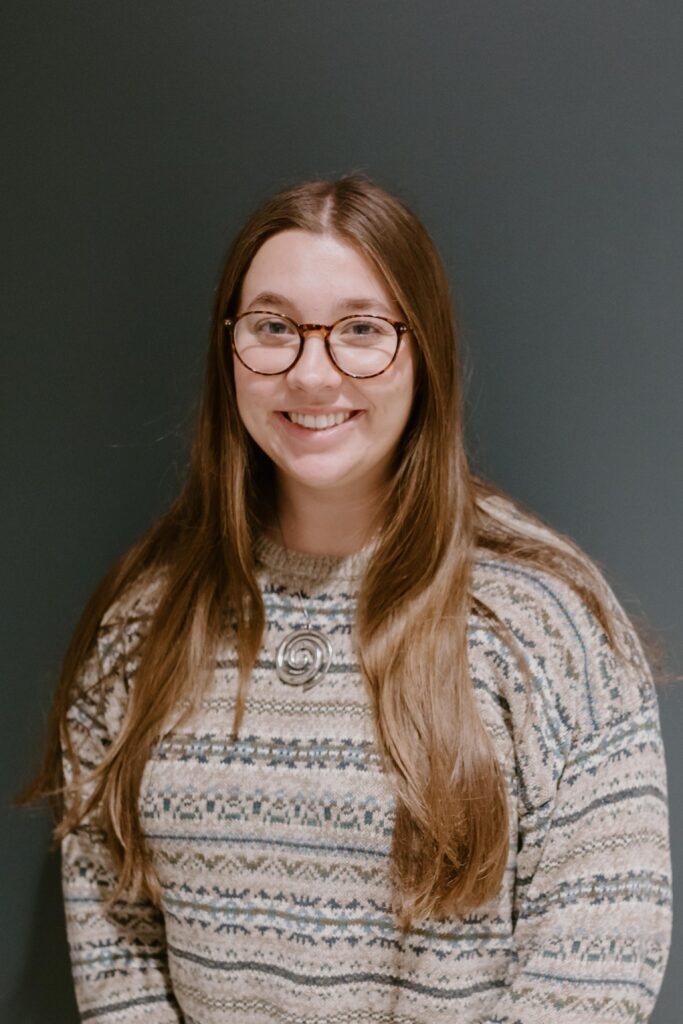
Meet Avery Case, Sustainability Intern at the Innovate Marquette Protolab
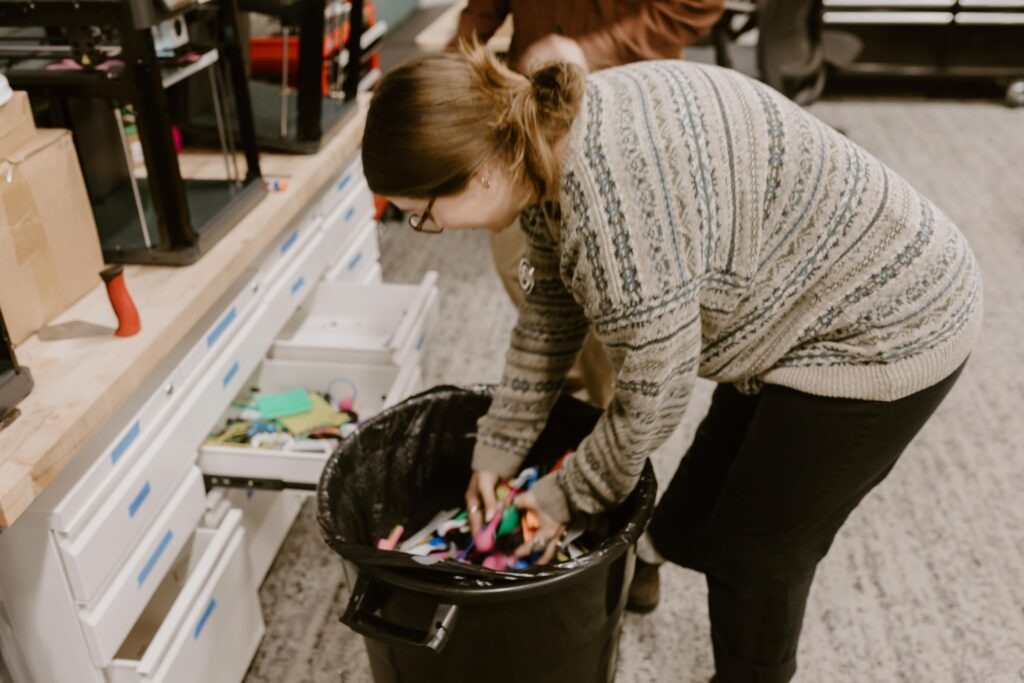
At the Innovate Marquette Protolab, ideas rarely take shape on the first try. Prototyping is built around testing and learning. A failed print can reveal what needs to change in a design, but it also leaves behind a harder question: What happens to the material of the failed print?
Northern Michigan University (NMU) student Avery Case is working to find an answer. As the Protolab’s sustainability intern, Avery is developing a system to collect, sort, and eventually reuse 3D printing waste that cannot go through traditional local recycling programs.
Meet Avery Case
Avery is originally from Lake Orion, Michigan. She chose NMU because the surrounding landscape offered more than a beautiful place to study. It gave her direct access to the environment at the center of her work.
At NMU, Avery majors in Environmental Studies and Sustainability with a minor in Global Sustainable Development. Outside of the Protolab, she serves as the Carbon Neutrality intern for NMU’s Sustainability Hub for Innovation and Environment (SHINE). In that role, she helps move the university’s Carbon Neutrality Plan forward and reports NMU’s overall emissions. She is also the student manager at the Outdoor Recreation Center in the Physical Education Instructional Facility.
Her studies, work, and time outdoors all return to the same belief: caring for the environment requires people to take responsibility for the waste they create.
“I am interested in sustainability because I believe humans have a debt to our environment, and living in Marquette, it is easily shown how important the environment is to the community,” Avery says.

A New Challenge In The Protolab
Avery’s work in the Protolab began through NMU’s Student Leader Fellowship Program, which asks each student to complete a 100-hour community service project. Her friend Kate Cudney was working on the design side of the Protolab and had noticed how much material was left behind by the 3D printing process. She suggested the lab as a possible project site.
The opportunity immediately interested Avery, even though she knew very little about 3D printing at the time. The problem connected directly to the reason she studies sustainability: materials that could have another use should not automatically become landfill waste.
“I don’t think anyone wants to walk on the shore of Lake Superior and see plastic,” Avery says.
The Innovate Marquette Protolab gives entrepreneurs, students, and community members access to technologies such as 3D printing, resin printing, laser cutting, scanning, and injection molding. It is a place where ideas become physical prototypes, and where trial and error is an important part of product development process.
That iterative process is valuable. Failed prints and redesigned parts help people improve their products before moving forward, but the material left behind is difficult to recycle. Pieces vary in size and may be made from different materials, making them unsuitable for conventional recycling streams.
“I have spent countless hours researching solutions to 3D printing waste, and honestly, there aren’t any great ones,” Avery says.
Building a Local Collection System
One established recycling service Avery found was willing to accept 3D printing waste, but the cost made it an impractical long-term solution. Instead, she began looking at what could be accomplished with the resources already available in Marquette.
Fortunately, the Protolab had not been sending its 3D printing waste to a landfill. The team had been collecting and storing it for several years, giving Avery material to study while she began building a more formal system.
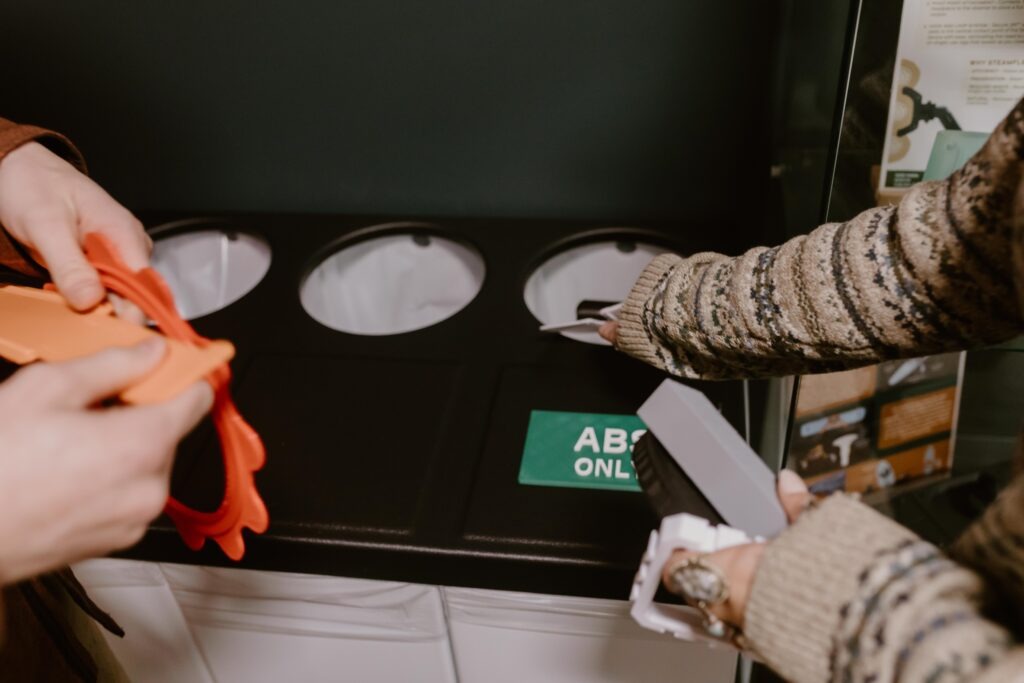
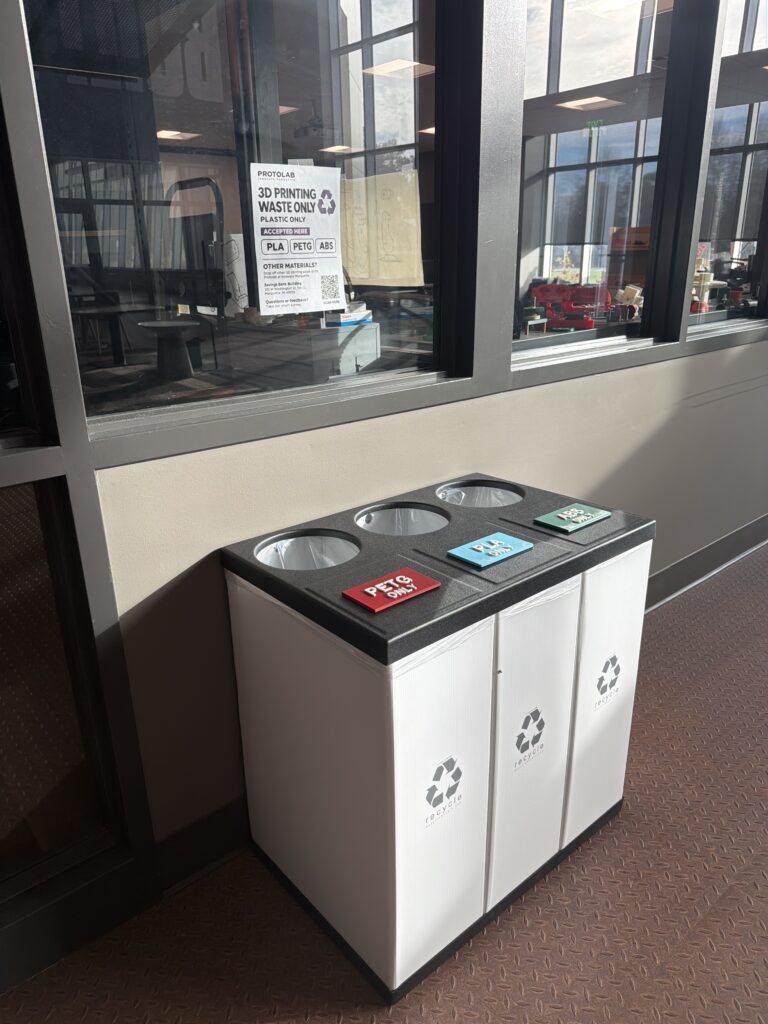
Avery decided a collection program was the right place to start. After learning that NMU’s engineering department also operates a 3D printing lab in the Jacobetti Complex, she began planning drop-off locations at both NMU and the Protolab. The goal is to collect waste from the labs while also giving students and community members who print at home a place to bring eligible material. Avery hopes the same model can eventually expand to other areas across Marquette.
Collection is only the beginning. Every piece must be sorted by material and size, a detailed process Avery has learned and taken responsibility for. Once sorted, the material is intended to move through a shredding machine being developed by NMU engineering students as their senior project. The shredded material could then be molded into parts for future use in the Protolab.
The pieces of the system are still being developed, but together they offer a practical path for keeping more 3D printing material in use.
Learning Through the Unknown
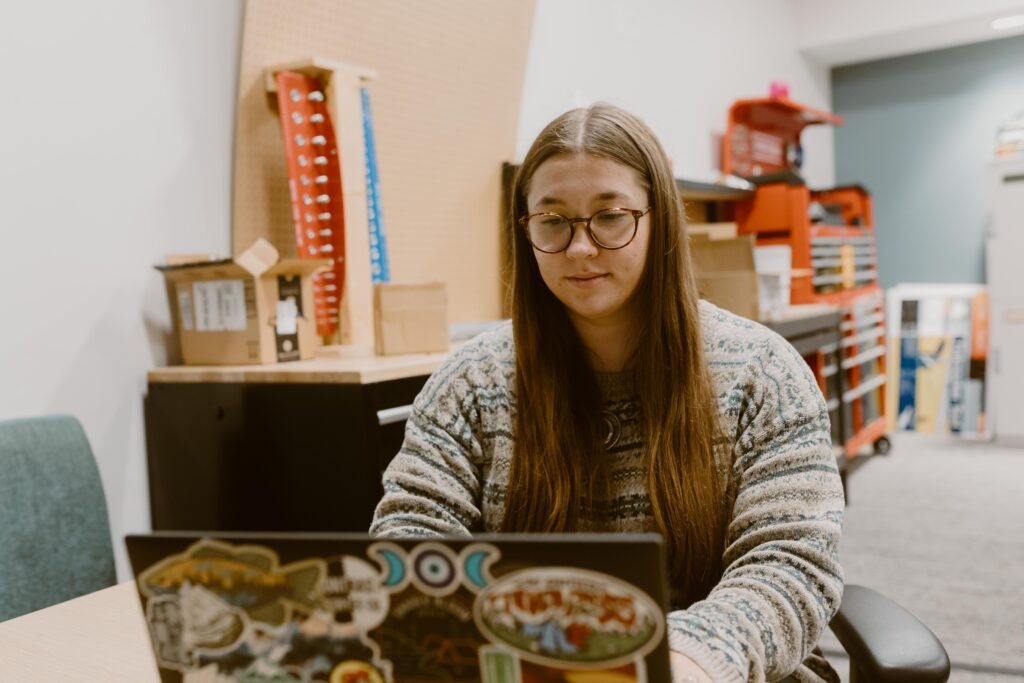
One of Avery’s biggest challenges has been learning an unfamiliar industry while trying to solve a problem that has few established answers. The Protolab team has helped her understand how different printers operate, which materials they use, and where waste appears throughout the process.
“I have learned so much about an industry I never thought I would set foot in, and I couldn’t be more grateful,” Avery says.
The experience has also changed the way Avery approaches sustainability work. At times, she felt there might never be a perfect solution to 3D printing waste. Rather than waiting for one, she worked with the equipment, knowledge, and partnerships available now to create a system that can continue improving over time.
A Program Built to Continue
Avery wants the collection and sorting program to become part of the Protolab’s everyday work long after her fellowship project is complete. Building a process that is clear and manageable for the team is an important part of making that possible.
She also hopes the project encourages others to look more closely at sustainability challenges in their own workplaces. The scale of environmental problems can feel daunting, but even a small project can change how an organization uses materials and thinks about waste. After graduation, Avery plans to work in carbon neutrality, helping an organization or community understand and reduce its emissions.
Learn more about the technology, services, and projects inside the Innovate Marquette Protolab.